Dental clinics handle instruments that come into contact with blood and saliva, two fluids capable of carrying blood‑borne
pathogens like hepatitis B virus (HBV), hepatitis C virus (HCV) and HIV. Even a single percutaneous injury can transmit HBV
in roughly 30 % of exposures and HCV in about 1.8 % Because saliva often contains gingival fluid, it is treated as potentially infectious.
A high‑quality autoclave is therefore the beating heart of a dental practice’s infection‑control program. It uses pressurized steam to kill bacteria,
viruses and resistant spores and must be relied upon every day to protect patients and staff. Below is a detailed look at why quality matters,
what can go wrong with cheap sterilizers, and how to choose the right autoclave for your clinic.
Why Using a Standard, High‑Quality Autoclave Matters
Prevents cross contamination
Dentists use sharp instruments that frequently contact blood or saliva. HBV, HCV and HIV can survive on instruments for days and remain infectious.
Steam sterilization in an autoclave exposes these instruments to direct saturated steam under pressure for a prescribed time—normally 121 °C for at
least 15 minutes or 132 °C for at least 4 minutes. Proper air removal is essential because trapped air acts as an insulator and prevents steam penetration.
The CDC notes that modern pre‑vacuum (Class B) autoclaves use a vacuum pump to remove air from packs and hollow instruments, allowing steam
to contact every surface and increasing sterilization reliability. Using a certified autoclave helps eliminate the risk of cross‑infection and protects both patients and dental team members.
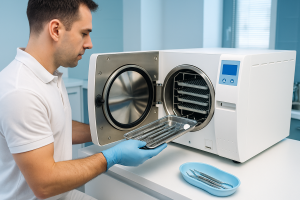
Ensures complete sterilization of complex loads
Not all autoclaves are created equal. The Cureus review of dental sterilization practices classifies tabletop autoclaves into three types based on air removal:
- Class N autoclaves: rely on gravity displacement; suitable for solid, unwrapped instruments used immediately.
- Class S autoclaves: can sterilize some wrapped items, but capabilities are defined by the manufacturer and are more limited.
- Class B autoclaves: use a powerful vacuum pump to evacuate air from the chamber and from inside porous or hollow instruments, making them suitable for wrapped, porous and hollow loads. A high‑quality Class B autoclave therefore provides the broadest sterilization capability.
During a sterilization cycle, pre‑vacuum autoclaves remove air, inject steam, hold the exposure temperature and finally dry the load. Mechanical, chemical and biological indicators should be used routinely to monitor each cycle. Many modern autoclaves include built‑in sensors that log temperature and pressure and alert the user if cycles fail.
Builds patient trust and professional credibility
Patients expect a dental office to maintain impeccable hygiene. Using a certified autoclave with documented sterilization cycles and biological monitoring is a visible demonstration of your commitment to safety. Professional bodies such as the ADA and CDC urge dental practices to follow national sterilization guidelines, implement written infection‑control protocols and monitor sterilizers regularly. Investing in quality equipment and adhering to standard operating procedures fosters trust and helps avoid costly downtime or reputational damage.
Hidden Dangers of Cheap, Low‑Quality Autoclaves
Opting for a bargain sterilizer may seem cost‑effective, but several hidden risks make cheap autoclaves a false economy:
- Inaccurate temperature and pressure sensors – Inferior devices may use a single sensor placed in one part of the chamber. If other areas remain below sterilization temperature, a cycle can appear successful while microorganisms survive. High‑quality units integrate multiple sensors to verify conditions throughout the chamber.
- Poor air removal – Gravity‑displacement (Class N) sterilizers cannot remove air from porous or hollow instruments. Without a powerful vacuum pump, steam will not penetrate internal channels, leaving parts unsterilized.
- Hidden costs and premature failures – Low‑grade materials result in frequent breakdowns, gasket failures and leaks. Repairs, calibration and unplanned downtime quickly exceed the initial savings. By contrast, premium autoclaves with stainless‑steel chambers, robust seals and dual water tanks reduce maintenance and extend service life.
- Safety hazards – An autoclave operates at pressures around 0.21–0.23 MPa[7]. Inadequate locking mechanisms could allow the door to open under pressure, causing scalding steam to escape. Industrial guidelines describe safe door designs that interlock with chamber pressure. Before pressurization begins, a quick‑closure system with “teeth” engages the door and vessel flanges; once pressurized, residual pressure must be vented before the latch disengages[8]. Some autoclaves include valves connected to the latch so operators can verify zero pressure before opening.
Features of a High‑Quality Dental Autoclave
When choosing a sterilizer, look for the following features to ensure reliable operation and regulatory compliance:
- Certified to international standards – Devices with CE, ISO or FDA certifications meet strict safety and performance protocols.
- Multiple thermal and pressure sensors – Quality autoclaves use at least two sensors to confirm that the entire chamber reaches the required temperature and pressure. Accurate sensors also enable automatic cycle control and documentation.
- Robust mechanical lock – The door should have a mechanical interlock that prevents it from opening under pressure. A safe design engages when the door is closed and releases only when the chamber is fully depressurized.
- Antibacterial (HEPA) filter for air removal – During pre‑vacuum cycles, contaminated air is exhausted from the chamber. A hydrophobic HEPA filter blocks bacteria and even viruses (about 10 × smaller than typical bacteria) from escaping. HEPA filters are hydrophobic, meaning they allow gases to pass but block water; this prevents condensation from clogging the filter. Filtering the air outlet protects the environment, and a second HEPA filter on the air inlet keeps the sterile load from being re‑contaminated at the end of the cycle. Some autoclaves house the filter in a miniature sterilization chamber to ensure the filter itself is sterilized after each cycle.
- Separate clean and wastewater reservoirs – A standard autoclave should have dedicated tanks for fresh and used water. The Labstac Class B sterilizer features dual stainless steel water tanks (two × 1.5 L) and a vapor filter to prevent contaminants from re‑entering the system.
- Effective drying system – After sterilization, instruments must be completely dry to prevent corrosion and microbe growth. Class B autoclaves typically integrate vacuum drying and active heating to ensure moisture removal.
- Automatic cycle management and safety alarms – Modern units allow pre‑programmed cycles (for wrapped, porous or solid items), store cycle data, and alert users to errors or maintenance requirements. For example, the Class B Fomos Foster 8L autoclave on our site offers rapid cycles, advanced vacuum air removal and an integrated drying system.
How to Select the Right Autoclave for Your Dental Clinic
Selecting the best autoclave depends on load types, throughput and regulatory environment:
- Match class to instrument types – For dental clinics sterilizing handpieces, hollow instruments and wrapped kits, a Class B machine is essential. Class S units may suffice for limited instrument sets, but Class N devices are inadequate for most dental applications.
- Consider chamber size and cycle speed – A 16 L chamber suits small clinics, while larger practices may need multiple units or a 23 L capacity. Look for machines offering rapid cycles (e.g., 4–60 minutes) and adjustable exposure times.
- Check for intuitive controls and documentation – Digital screens, data logging and USB/Ethernet connectivity simplify compliance and traceability. Some models automatically run Bowie‑Dick tests and vacuum leak tests to verify performance.
- Evaluate maintenance support – Choose suppliers that provide local servicing, spare parts and training. Autoclaves with self‑diagnostics and easily replaceable filters reduce downtime. For example, our medical autoclaves feature robust hydrogen peroxide plasma technology and intuitive 7‑inch touchscreens.
- Plan for long‑term costs – Consider energy consumption, consumable costs (gaskets, filters) and warranty coverage. Investing in quality equipment reduces repair costs over time.
Additional Sterilization Solutions
A complete infection‑control program extends beyond the autoclave. Our site offers complementary products to streamline instrument reprocessing:
- Dental autoclave UAE – explore tabletop autoclaves designed specifically for dental clinics in the UAE, including Class B units suitable for wrapped and unwrapped instruments.
- Class B autoclave for dentists – learn more about the Fomos Foster 8 L autoclave, featuring rapid vacuum cycles, integrated drying and compliance with EU Class B standards.
- Our Services – beyond sterilizers, we design turnkey clinics and laboratories, ensuring spaces meet regulatory requirements and support efficient workflows.
- Ultrasonic cleaners and sealing machines – remove debris before sterilization and seal instrument pouches for safe storage.
Conclusion
A high‑quality autoclave is the cornerstone of dental infection control. Choosing a certified machine with advanced vacuum technology, multiple sensors, robust safety features and HEPA filtration ensures that instruments are truly sterile and patients are protected. While cheap devices may appear appealing, they pose significant health risks and hidden costs. Investing in superior equipment is an investment in patient safety, professional credibility and long‑term clinic efficiency.