Digital Dentistry Workflow 2026: Transforming UAE Clinics with Alliedstar Intraoral Scanner
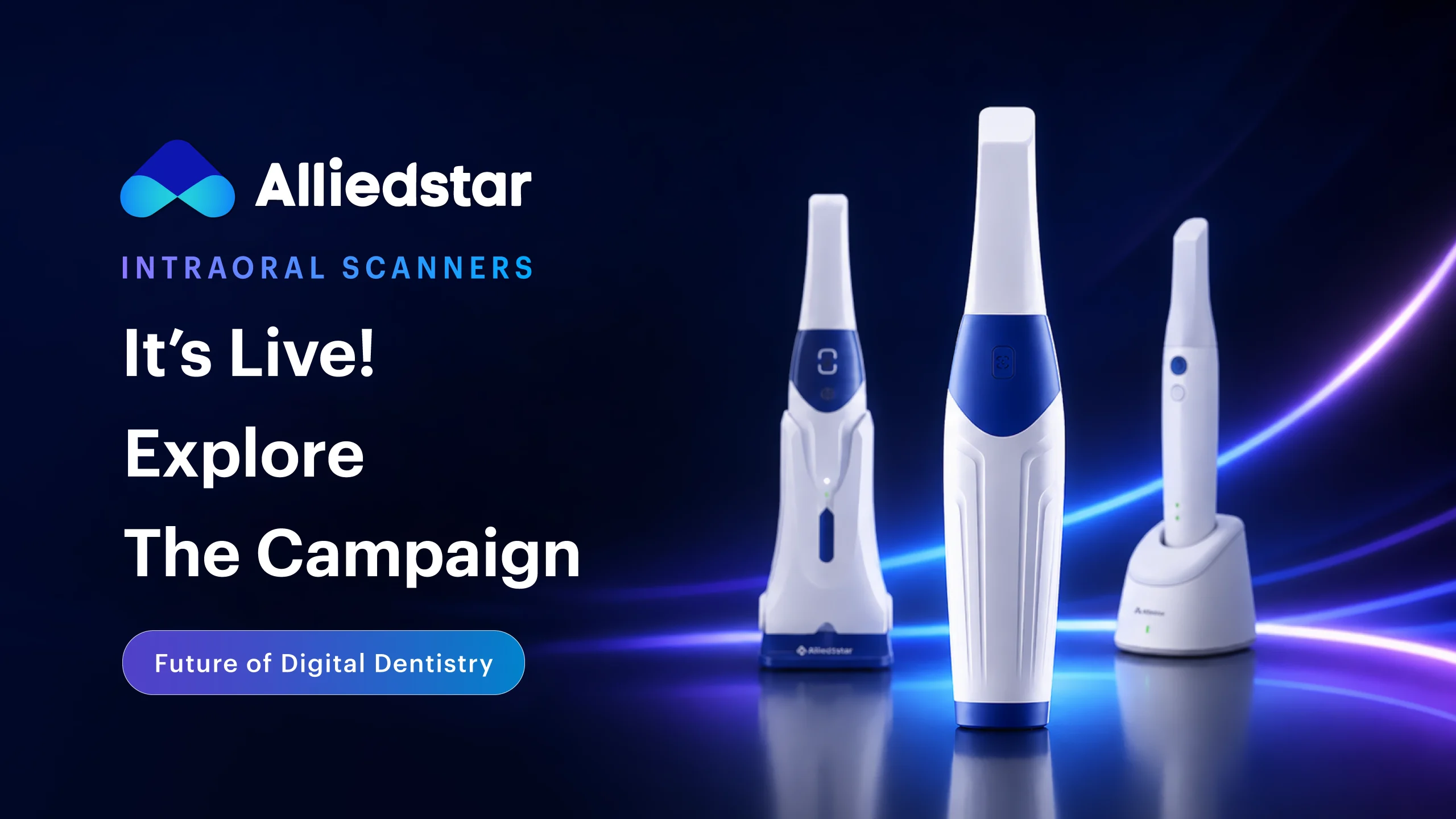
The Alliedstar Intraoral Scanner is central to the transformation of contemporary dentistry from a craft-based discipline to a high-precision digital science has been catalyzed primarily by the development and refinement of intraoral scanning (IOS) technology. At the nexus of this revolution is the ability to convert the complex, humid, and geometrically intricate environment of the human oral cavity into a high-fidelity three-dimensional digital dataset. This report provides an exhaustive analysis of the current state of intraoral scanning, with a specific focus on the Alliedstar product portfolio—including the Sensa, AS 200E, and AS 260 models—and their strategic implementation within the Middle Eastern market through the regional leadership of Futuremirates.
The shift toward digital impressions is no longer a peripheral trend but a central requirement for clinical excellence. Traditional analog methods, utilizing polyvinyl siloxane (PVS) or alginate, are inherently limited by material shrinkage, disinfection-induced distortion, and the logistical challenges of physical model management. In contrast, the digital workflow offers a level of trueness and precision that facilitates superior marginal fit, reduced chairside adjustment time, and a significantly enhanced patient experience. As the industry moves into 2025 and 2026, the integration of artificial intelligence (AI) and cloud-based collaboration platforms has further expanded the utility of scanners from simple impression devices to comprehensive diagnostic and treatment-planning hubs.
The Technological Foundation of the Alliedstar Intraoral Scanner
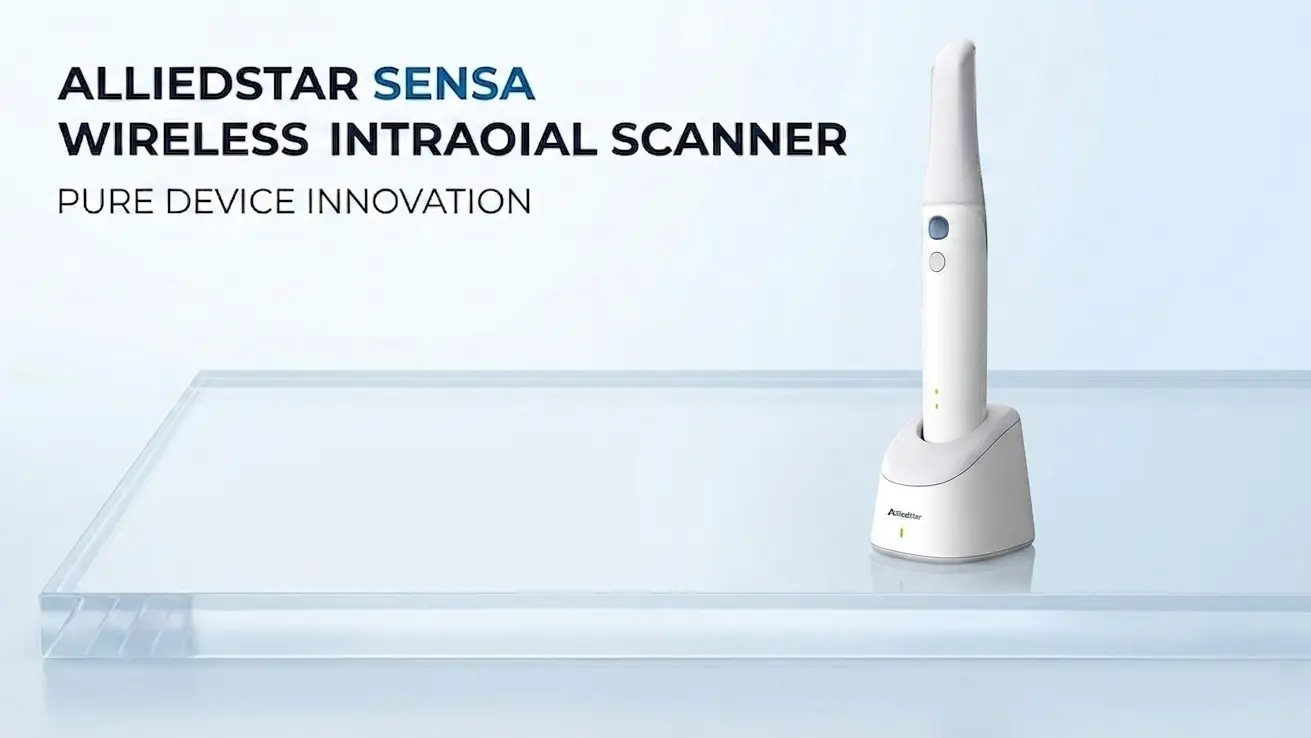
The operational mechanism of the Alliedstar Intraoral Scanner involves the projection of a light source—ranging from structured light to high-speed laser—onto the surfaces of teeth and gingiva. For instance, the Alliedstar Intraoral Scanner Sensa captures thousands of images per second to ensure a fluid and lag-free experience. These raw data points are then processed by proprietary algorithms to create an accurate 3D mesh model with approximately \mu m$ accuracy in full-arch scans.
Comparative Analysis of Hardware Architecture
The hardware design of a scanner directly influences its clinical usability and the fatigue levels of the operator. The industry has seen a clear trend toward miniaturization and wireless connectivity.
| Technical Specification | Alliedstar Sensa (2025) | Alliedstar AS 200E | Alliedstar AS 260 |
| Connection Type | Wireless (TP-Link USB 3.0) | Wireless (Authentic) | Wired (Detachable USB-C) |
| Weight | 230g | 245g (with battery) | 175g |
| Full Arch Scan Time | 30 Seconds | 20 Seconds | 20 Seconds |
| Accuracy (Full Arch) | High-Premium Grade | \mu m$ | \mu m$ |
| Battery Performance | 3 hrs continuous | 2 hrs continuous | N/A (Bus-powered) |
| Fast Charge Support | 3 min for full case | N/A | N/A |
| Calibration Status | Calibration-Free | Calibration-Free | Calibration-Free |
| Tip Durability | 180 Autoclave cycles | 60 – 100 cycles | 60 – 100 cycles |
| Source Reference |
The introduction of the Alliedstar Sensa marks a significant evolution in the company’s design philosophy, moving away from the industrial aesthetic of the AS 100 toward a refined, ergonomic, and “shockproof” construction. The Sensa’s ability to withstand accidental drops from desk height without requiring recalibration is a major second-order benefit for busy clinical environments, effectively reducing the risk of costly downtime and hardware replacement.
Clinical Workflow: The Protocol for Digital Excellence
The effectiveness of an intraoral scanner is fundamentally tied to the clinician’s adherence to a structured acquisition protocol. While the software provides significant assistance, the initial preparation and scanning path remain the most critical variables in data quality.
Phase 1: Patient and Environment Preparation
The oral cavity is a hostile environment for optical sensors. High humidity, moving soft tissues, and the presence of reflective fluids (saliva and blood) can all introduce noise into the scan data.
-
Moisture Control: The teeth must be meticulously dried. Any residual fluid creates a specular reflection that the scanner interprets as a surface protrusion, leading to inaccuracies in the final mesh. The “drier is better” mantra is central to high-resolution photography and scanning.
-
Retraction and Visibility: For crown and bridge preparations, the margin must be visible. The use of retraction cords (often the double-cord technique) or soft-tissue lasers ensures that the scanner can capture the finish line of the preparation. If the scanner’s light cannot reach a surface, the data cannot be captured.
-
Lighting conditions: While traditional dental photography requires external flash, intraoral scanners perform best when external chair lights and loupe lights are turned off to prevent glare on the dental surfaces.
Phase 2: Systematic Scanning Sequence
A consistent scan path allows the software to stitch images efficiently, minimizing the computational load and the risk of “warping” the model.
-
Occlusal Capturing: Scanning begins on the occlusal surfaces, moving from the most posterior tooth to the contralateral side. This provides a stable geometric “anchor” for the software.
-
Lingual and Palatal Surfaces: The scanner is tilted approximately 45 degrees to capture the lingual/palatal geometry. This area is often easier to scan as it is less prone to interference from the buccal mucosa.
-
Buccal Surfaces: Capturing the buccal side requires careful management of the cheek. Maintaining a distance of 5-10 mm between the tip and the tooth surface ensures the focal depth is optimal for the optical engine.
-
Interproximal Data and the “Twist Technique”: To capture the contact points around a preparation, the clinician should employ the Twist Technique. This involves positioning the scanner at a 45-degree angle to the interproximal space and performing a “twist and hold” motion to allow the light to penetrate the deep proximal areas.
Phase 3: Bite Registration and Functional Analysis
The buccal bite scan is the final step in the acquisition process. The patient is guided into maximum intercuspation (MIP). The clinician scans the buccal relationship of the upper and lower teeth, typically capturing 3-4 teeth on each side to provide the lab with sufficient information for proper occlusion. Advanced software like ScanPro now allows for “Lower Jaw Movement” capture, which records the dynamic excursive movements of the patient, enabling the fabrication of restorations that require minimal occlusal adjustment.

Software Intelligence: AS Connect and ScanPro
The hardware of a scanner provides the raw data, but the software ecosystem determines the clinical utility. The Alliedstar platform is divided into two primary components: ScanPro for data acquisition and AS Connect for cloud management.
ScanPro Acquisition Software
ScanPro incorporates advanced AI algorithms that address the most common challenges in intraoral scanning.
-
Smart Filtering and Soft Tissue Removal: The software recognizes the movement of soft tissues (cheeks and tongue) and automatically filters them out of the final 3D model. This prevents the “stitching errors” that occurred in earlier generations of digital impression systems.
-
Live Scan Guidance: Featured prominently in the Sensa model, Live Scan Guidance provides real-time visual feedback on the screen, showing the operator the ideal path to follow. This is particularly valuable for training new staff and ensuring consistent results across the practice.
-
Graded Scan Quality Detection: The software evaluates the density of the captured data in real-time. Areas that are inadequately captured—such as a margin that lacks clarity—are highlighted, allowing the clinician to rescan that specific area before dismissing the patient.
AS Connect Cloud Platform
AS Connect serves as a one-stop cloud platform for digital dentistry, offering 10 TB of free storage. This enables:
-
Seamless Lab Integration: Scans can be shared instantly with dental laboratories, such as Glidewell, through integrated partner menus. This eliminates the need for manual file transfers and reduces the risk of data loss.
-
Multi-Device Synchronization: Patient data and 3D models can be accessed from any PC or mobile device, allowing for treatment planning in the office, the lab, or even remotely.
-
Patient Engagement Apps: Tools like “Smile Design” and “Ortho Simulation” allow clinicians to visualize potential treatment outcomes for patients, significantly increasing case acceptance rates.
Economic Viability and ROI Analysis
The financial justification for adopting intraoral scanning technology is multifaceted, encompassing direct material savings, time efficiency, and enhanced diagnostic capabilities.
| Financial Factor | Traditional Impression (Analog) | Digital Impression (IOS) |
| Material Costs | High (PVS, Trays, Stone) | Negligible (Disinfectants) |
| Logistics/Shipping | Physical courier required | Instant digital upload |
| Staff Labor | 20-30 mins (pouring/trimming) | 0 mins |
| Lab Turnaround | 2-3 weeks average | 1-1.5 weeks (or same-day) |
| Storage | Physical shelf space needed | Cloud storage (Digital) |
| Return on Investment | Continuous overhead | Payback in ~2 years |
| Source Reference |
The ROI is not merely about the cost of the device; it is about the “opportunity cost” of the time saved. For a restorative dentist, reducing a 20-minute analog procedure to a 5-minute digital scan allows for the scheduling of additional patients per day. Furthermore, the accuracy of digital impressions reduces the “remake rate.” A single remade crown can cost a practice hundreds of dollars in lost chair time and lab fees; by minimizing these errors, an intraoral scanner directly protects the practice’s profit margins.
Advanced Clinical Applications and Specialized Workflows
As digital technology matures, it is moving beyond simple crown and bridge applications into specialized dental fields.
Digital Implantology
Alliedstar Intraoral Scanner ecosystem supports advanced implant workflows, allowing for high-precision prosthetic outcomes.
-
Pre-Op Baseline: A full-arch scan is taken to record the original dentition and soft tissue contours.
-
Selective Rescanning: Following the placement of healing abutments, the specific areas are “cut out” in the software and rescanned. This ensures the emergence profile is captured accurately.
-
Scan Body Integration: The use of digital scan bodies allows for the precise transfer of the implant’s 3D position and orientation to the lab, eliminating the inaccuracies of traditional open-tray or closed-tray impressions.
Edentulous Scanning and Removables
Scanning a completely edentulous arch remains one of the most challenging tasks in digital dentistry due to the lack of geometric landmarks. Strategies include:
-
Biocompatible Markers: Applying reference points to the soft tissue can help the scanner’s AI “stitch” the images of the smooth, pink gingiva more accurately.
-
Wax Rim Integration: Scans can be used to create initial wax rims, which are then functionally adjusted in the mouth and rescanned to provide the master data for digital denture fabrication.
Regional Leadership: The Futuremirates Ecosystem in the UAE
The adoption of digital dentistry in the United Arab Emirates and the broader GCC region is characterized by a demand for premium technology paired with robust local support. Futuremirates has positioned itself as the preeminent leader in this space, acting as a bridge between global innovators like Alliedstar and local clinical practices.
Turnkey Solutions and Infrastructure Design
Futuremirates does not merely supply equipment; they provide a comprehensive “Clinic and Laboratory Design” service. This includes:
-
Regulatory Compliance: Ensuring that sterilization rooms (CSR) and medical imaging suites meet the stringent health and safety standards of the UAE.
-
Technological Integration: Seamlessly connecting intraoral scanners with 3D printers, milling machines, and practice management software to create a cohesive digital hub.
-
Certified Technical Support: Every piece of equipment is installed and calibrated by trained engineers. In a region where rapid growth is the norm, the ability to provide reliable after-sales service and genuine spare parts is a critical differentiator for Futuremirates.
Educational Commitment and Market Growth
The UAE dental market is projected to grow significantly, driven by a 12% annual increase in demand for advanced care. Futuremirates supports this growth through:
-
Workshops and Training: Organizing specialized courses to help clinicians master the “learning curve” of digital dentistry. This educational focus ensures that practitioners are not just buying technology but are achieving the best possible clinical results.
-
Regional Expansion: While headquartered in Dubai, Futuremirates is expanding its influence across the GCC and African markets, enabling clinics to scale their digital capabilities with confidence.
Digital Marketing and SEO Strategy for 2025
For a modern dental practice, the clinical advantage of owning an intraoral scanner must be translated into market visibility. In 2025, SEO for dental clinics has shifted toward E-E-A-T (Experience, Expertise, Authoritativeness, and Trustworthiness) and AIO (Artificial Intelligence Optimization).
Categorizing Patient Search Intent
Practices must target high-value keywords that reflect the specific intent of the modern patient.
| Search Intent Type | Example Keywords | Strategic Focus |
| Informational | “Is a dental scan better than putty?” | Educational blog content/AEO |
| Commercial | “Best cosmetic dentist in Dubai” | Reputation, reviews, technology |
| Transactional | “Same-day crown cost UAE” | Landing pages, clear CTA |
| Local/Geo | “Dentist near Al Qusais” | Google Maps, Local SEO |
| Specialized | “All-on-4 dental implants Dubai” | Authority, expert authorship |
| Source Reference |
Maintenance and Hygiene Protocols
The longevity of a high-precision optical device like an intraoral scanner depends on strict adherence to maintenance protocols.
-
Sterilization of Tips: Alliedstar tips are designed for durability, with the Sensa model supporting up to 180 autoclave cycles at 4^{\circ}C$. It is essential to use a sterilization pouch and ensure the mirror is completely dry before the cycle to prevent water spots that could degrade scan quality.
-
Disinfection of the Handpiece: The scanner body should be wiped with hospital-grade disinfectants. Clinicians must avoid getting fluids into the optical window or the battery compartment.
-
Battery Management: For wireless models, maintaining the lithium-ion batteries is crucial. To avoid shortening the lifespan, the charging cradle should be connected to the dedicated scanning laptop, and “fast chargers” intended for consumer electronics (like Apple fast chargers) should be avoided.
-
Data Security: With the move to cloud-based storage on AS Connect, ensuring HIPAA compliance and secure data backups is a prerequisite for professional practice.
The Future of the Digital Dental Ecosystem
The trajectory of intraoral scanning is moving toward “Total Digital Integration.” In this future, the scanner is not merely an impression tool but a continuous monitoring device. AI software like TRIOS Dx Plus or Alliedstar’s evolving apps can monitor caries, plaque, and gingival recession by comparing scans taken at different time intervals.
The acquisition of Alliedstar by the Straumann Group in 2023 signals the industry’s recognition of the brand’s value and its potential for global scale. For clinicians, this means continued innovation in the software ecosystem and improved integration with a wide range of prosthetic and implant solutions.
In conclusion, the successful adoption of intraoral scanning technology—embodied by Alliedstar Intraoral Scanner portfolio and supported by the regional expertise of Futuremirates—provides a transformative opportunity for dental practices. By combining high-precision hardware, AI-powered software, and a commitment to clinical excellence, dental professionals can deliver a level of care that is faster, more accurate, and more comfortable than ever before. The digital revolution is no longer a promise of the future; it is the standard of the present.