The adoption of CAD CAM Dental UAE technology is revolutionizing modern prosthodontics across Dubai, Abu Dhabi, and the Northern Emirates. As private dental centers demand faster turnaround times and superior marginal fit, embracing complete Digital Dentistry UAE workflows has transformed dental laboratories from labor-intensive craft workshops into automated digital manufacturing hubs.
Table of Contents
- 1. The Digital Transformation of UAE Dental Laboratories
- 2. The 4 Pillars of a CAD/CAM Dental Production Line
- 3. Subtractive Milling vs. Additive 3D Printing Workflows
- 4. Next-Gen Restorative Materials: Multilayer Zirconia & Resins
- 5. Lab Production Efficiency and ROI Metrics
- 6. Frequently Asked Questions (FAQ)
1. The Digital Transformation of UAE Dental Laboratories
Historically, commercial dental laboratories in Dubai relied on manual stone cast pouring, wax modeling, and lost-wax casting methods. While skilled, this analog approach suffered from dimensional distortion, human inconsistency, and lengthy delivery delays across the UAE. Today, integrating CAD CAM Dental UAE machinery allows laboratories to accept instant optical scan files from clinics equipped with modern intraoral scanners, initiating crown fabrication within minutes of clinical tooth preparation.

2. The 4 Pillars of a CAD/CAM Dental Production Line
A high-capacity digital dental lab in the UAE is structured around four interconnected hardware and software layers:
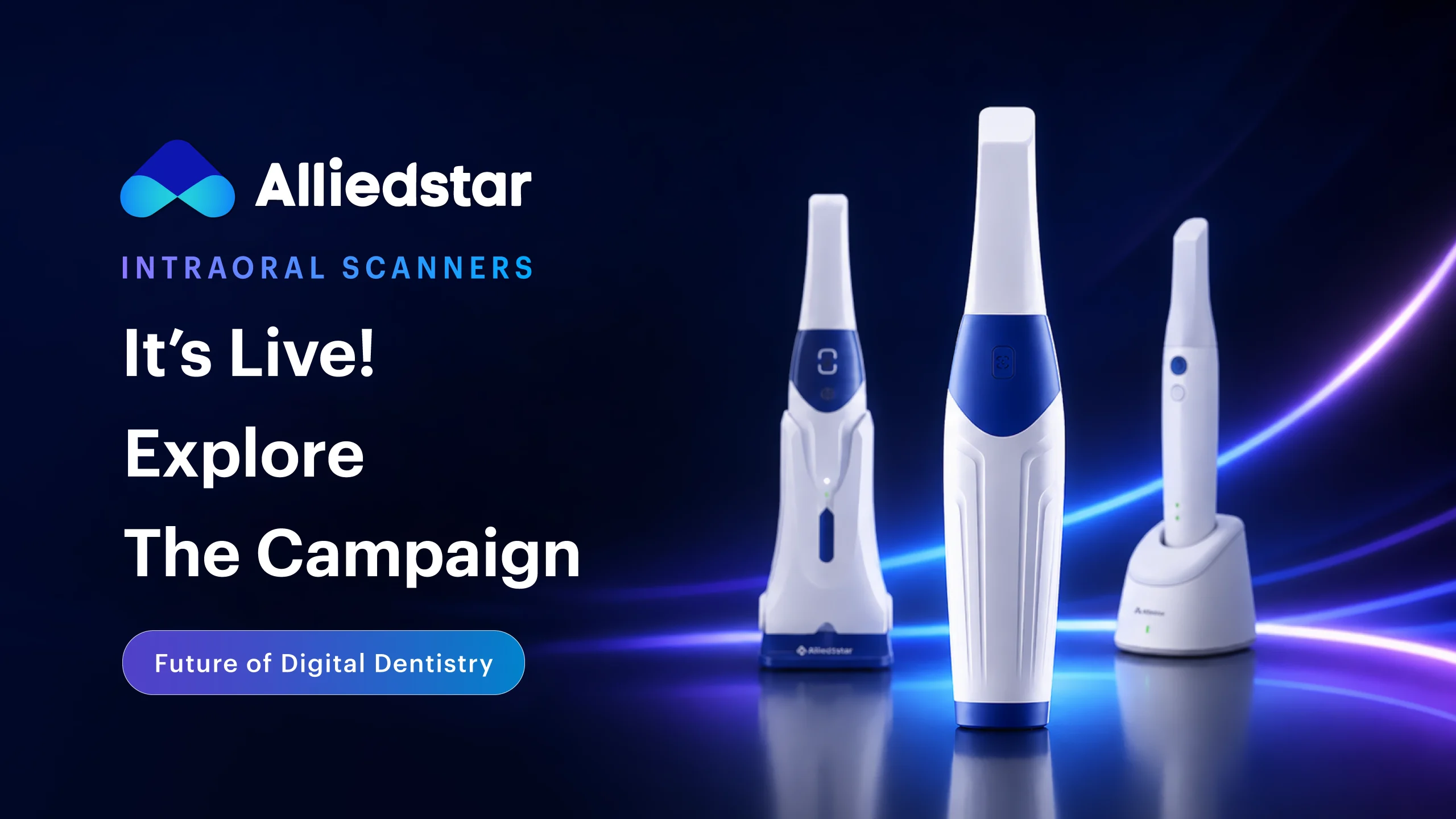
- Data Ingestion (3D Scanners): High-precision desktop laboratory scanners (such as blue-light structured optical scanners) for digitizing physical master models and impression trays, complemented by direct cloud ingestion of intraoral STL files from chairside scanners like the Alliedstar AS260 and Alliedstar Sensa.
- Dental CAD Design Software: Open CAD architecture platforms such as exocad DentalCAD, 3Shape Dental System, and Dental Wings allow technicians to design anatomical crowns, hybrid bridges, custom implant abutments, and partial denture frameworks.
- CAM Nesting & Toolpath Calculation: Specialized CAM software calculates optimal toolpaths, material blank nesting, and spindle speeds to maximize block yield and prevent tool breakage.
- Precision Manufacturing Units: 5-axis dry and wet dental milling machines and medical-grade DLP/LCD 3D printers execute automated physical production.
3. Subtractive Milling vs. Additive 3D Printing Workflows
Modern Digital Dentistry UAE relies on the synergy between subtractive milling and additive 3D printing:
| Production Method | Ideal Clinical Indications | Key Advantages in UAE Practice |
|---|---|---|
| 5-Axis Dry Milling | Zirconia crowns, multi-unit bridges, PMMA temporaries, PEEK frameworks | Exceptional material strength (1,200+ MPa), high surface luster, automated disc changers |
| 5-Axis Wet Milling | Glass ceramics (lithium disilicate), composite blocks, custom titanium abutments | Coolant irrigation prevents micro-fracturing in brittle glass ceramics and dissipates metal heat |
| Dental 3D Printing (DLP/LCD) | Study models, clear aligner master casts, splints, surgical guides, castable patterns | Mass production capability (10–20 models per batch) with minimal raw material waste |
4. Next-Gen Restorative Materials: Multilayer Zirconia & Resins
The rise of CAD/CAM technology in the UAE coincides with breakthroughs in dental materials science. Modern 4D and 5D multilayer zirconia discs mimic natural enamel gradience—blending high incisal translucency (49%+) with high cervical flexural strength (1,100+ MPa). In cosmetic centers across Jumeirah and Downtown Dubai, monolithic multilayer zirconia crowns now eliminate the risk of aesthetic porcelain chipping while drastically cutting lab finishing times.
To support high-temperature processing, labs require dependable infection control and lab safety standards. Explore our full range of certified CSR sterilization units and medical autoclaves to maintain pristine bio-safety standards across lab-to-clinic deliveries.
5. Lab Production Efficiency and ROI Metrics
Transitioning to automated CAD/CAM machinery delivers immediate financial and operational dividends for UAE dental laboratories:
- Turnaround Reduction: Standard crown delivery times decrease from 4–5 business days to same-day or 24-hour turnaround, attracting high-volume clinic accounts.
- Labor Optimization: Master dental technicians transition from repetitive manual wax carving to digital aesthetic design, quadrupling per-technician daily case output.
- Remake Reduction: Sub-micron digital margin detection and automated virtual articulation reduce restoration seating remakes to under 1.5%.
Discover how Futuremirates assists commercial laboratories and in-house clinic labs through tailored biomedical equipment servicing and strategic supply partnerships.
11. Verifying Passive Fit in Full-Arch Implant Restorations
In full-arch implant rehabilitations (All-on-4 and All-on-6) across Dubai, ensuring non-binding passive fit is essential to prevent bone resorption or screw loosening. Laboratories utilize digital verification protocols, milling rigid PMMA trial frameworks directly from digital scan body data. Clinicians seat the prototype in the mouth, perform the Sheffield one-screw test, and verify screw seat passivity under periapical radiography before finalizing the definitive monolithic zirconia framework.
6. Step-by-Step CAD/CAM Lab Production Workflow
A digitized dental laboratory in the UAE operates through a streamlined 6-stage manufacturing protocol:
- Case Ingestion & 3D Model Generation: Digital impressions received from clinics using open-format intraoral scanners are imported into CAD software. Virtual margins are verified, and master working models with detachable dies are 3D printed using biocompatible model resin.
- Anatomical CAD Design: Technicians design monolithic restorations in exocad or 3Shape Dental System, customizing emergence profiles, contact points, and functional occlusal anatomy.
- CAM Toolpath Generation: Open CAM software (e.g. MillBox or HyperDENT) calculates 5-axis toolpaths, disc blank nesting, support sprues, and collision-avoidance parameters.
- High-Precision 5-Axis Milling: The 5-axis milling unit carves the restoration from pre-sintered multilayer zirconia blanks with sub-10 micron margin accuracy.
- Thermal Sintering & Crystallization: Restorations are placed in high-temperature sintering furnaces reaching 1,500°C to 1,550°C, transforming pre-sintered chalky zirconia into ultra-strong, crystalline ceramic.
- Staining, Glazing & Quality Inspection: Surface characterization, glaze firing, and final optical inspection under stereomicroscopes before ultrasonic cleaning and sterile packaging.
7. Sintering Dynamics: Fast Sintering vs. Conventional Heating Cycles
Thermal processing is critical to restoring aesthetic vitality and structural integrity to zirconia restorations:
- Conventional Sintering (8 to 12 Hours): Gradual thermal ramping (5°C to 8°C per minute) provides maximum structural stability, ideal for multi-unit All-on-X bridge frameworks.
- Speed Sintering (90 to 120 Minutes): High-speed furnaces utilize specialized heating elements to rapidly sinter single posterior crowns, supporting same-day delivery models in Dubai’s private cosmetic centers.
11. Verifying Passive Fit in Full-Arch Implant Restorations
In full-arch implant rehabilitations (All-on-4 and All-on-6) across Dubai, ensuring non-binding passive fit is essential to prevent bone resorption or screw loosening. Laboratories utilize digital verification protocols, milling rigid PMMA trial frameworks directly from digital scan body data. Clinicians seat the prototype in the mouth, perform the Sheffield one-screw test, and verify screw seat passivity under periapical radiography before finalizing the definitive monolithic zirconia framework.
8. Advanced Zirconia Shading & Infiltration Techniques
In high-end aesthetic dental centers across the UAE, creating natural-looking restorations with CAD CAM Dental UAE machinery requires sophisticated finishing techniques:
- Acid-Free Coloring Liquids: Applying specialized water-based infiltration liquids to pre-sintered green-state zirconia allows technicians to paint warm cervical dentin tones, natural mammelon structures, and blue-grey incisal halos before firing.
- Fluorescent Glazing Systems: Natural human dentition fluoresces bright blue-white under UV light. Using fluorescent glaze pastes ensures zirconia crowns mimic natural vitality in low-light and evening environments.
- Micro-Layering with Enamel Porcelains: Cutting back 0.3mm of the buccal incisal edge on monolithic anterior crowns and layering aesthetic feldspathic enamel creates deep optical depth and natural surface perikymata.
9. Overcoming Production Bottlenecks in Commercial Dental Labs
As digital case volume expands across laboratories in Dubai, managing production bottlenecks is vital:
- Milling Machine Redundancy: Operating multiple 5-axis milling units prevents catastrophic production shutdowns if one machine requires spindle calibration or routine preventive maintenance.
- Automated Disc Changers: High-production laboratories in Dubai utilize milling machines equipped with 6 to 10-disc automated blank carousels, allowing overnight, unattended continuous milling of zirconia discs.
- Smart Sintering Scheduling: Batching zirconia restorations into evening 8-hour slow-sintering cycles maximizes furnace heating efficiency and frees technicians to focus on aesthetic characterization during morning shifts.
12. Virtual Articulation vs. Physical Facebow Transfers
Modern CAD CAM Dental UAE laboratories increasingly utilize digital virtual articulators. By importing dynamic jaw motion data from compatible intraoral scanners, technicians simulate protrusive and lateral excursion movements in software. This ensures restorations exhibit harmonious anterior guidance and zero posterior interference, drastically reducing chairside occlusal grinding adjustments during clinical try-in.
6. Frequently Asked Questions (FAQ)
What is the difference between wet and dry dental milling machines?
Dry milling machines utilize compressed air and vacuum extraction to mill materials like pre-sintered zirconia, PMMA, and wax. Wet milling machines circulate filtered liquid coolant to mill hard materials like lithium disilicate (glass ceramic), composite resins, and titanium.
Can a dental lab in the UAE accept scans from any brand of intraoral scanner?
Yes, provided the laboratory operates open-format CAD software like exocad that accepts standard STL, PLY, and OBJ files. This enables labs to seamlessly receive digital impressions from scanners such as the Alliedstar scanner family.
What sintering furnace parameters are required for multilayer zirconia?
High-translucency multilayer zirconia typically requires programmable dental sintering furnaces capable of reaching 1,500°C to 1,550°C with controlled heating ramps and cooling cycles to prevent internal crystal stress and optical clouding.
How does 3D printing integrate with clear aligner manufacturing in Dubai?
Technicians stage orthodontic tooth movement in specialized CAD software, 3D print sequential dental models in biocompatible photopolymer resin, and then thermoform clear polyurethane foils using positive pressure forming machines to produce clear aligners.
Ready to upgrade your laboratory with modern CAD/CAM equipment? Contact the Futuremirates technical solutions team for comprehensive machine demonstrations, CAD software training, and local engineering support.
Modernize Your Dental Lab with Futuremirates
Equip your facility with world-class CAD/CAM dental milling machines, intraoral scanning systems, and local UAE technical support. Boost lab production today.
- Digital Dentistry & Scanners
- Alliedstar Open-Architecture Scanners
- Laboratory Sterilization & CSR
- Technical Support & Maintenance
- Request CAD/CAM Equipment Consultation