Intraoral Scanner UAE: Complete Buying Guide for Dental Clinics
Choosing the right Intraoral Scanner UAE solution is an important step for dental clinics moving toward digital dentistry. The correct system can improve digital impression quality, patient comfort, laboratory communication, case documentation and the overall efficiency of restorative, orthodontic and implant workflows.
However, an intraoral scanner should not be selected only by comparing scan speed or the initial purchase price. Dental clinics in Dubai, Abu Dhabi, Sharjah and other Emirates should also evaluate clinical accuracy, scanner ergonomics, software compatibility, export formats, recurring fees, training, warranty and local technical support.
This guide explains how to compare an Intraoral Scanner UAE system and choose a solution that supports both current clinical requirements and future business growth.
What Is an Intraoral Scanner?
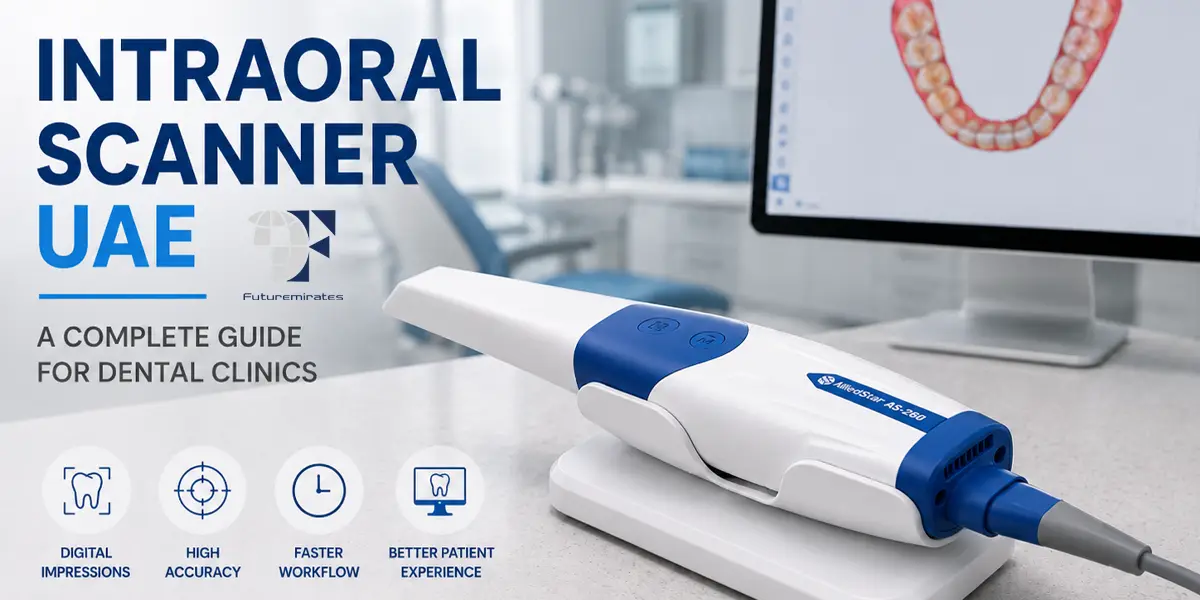
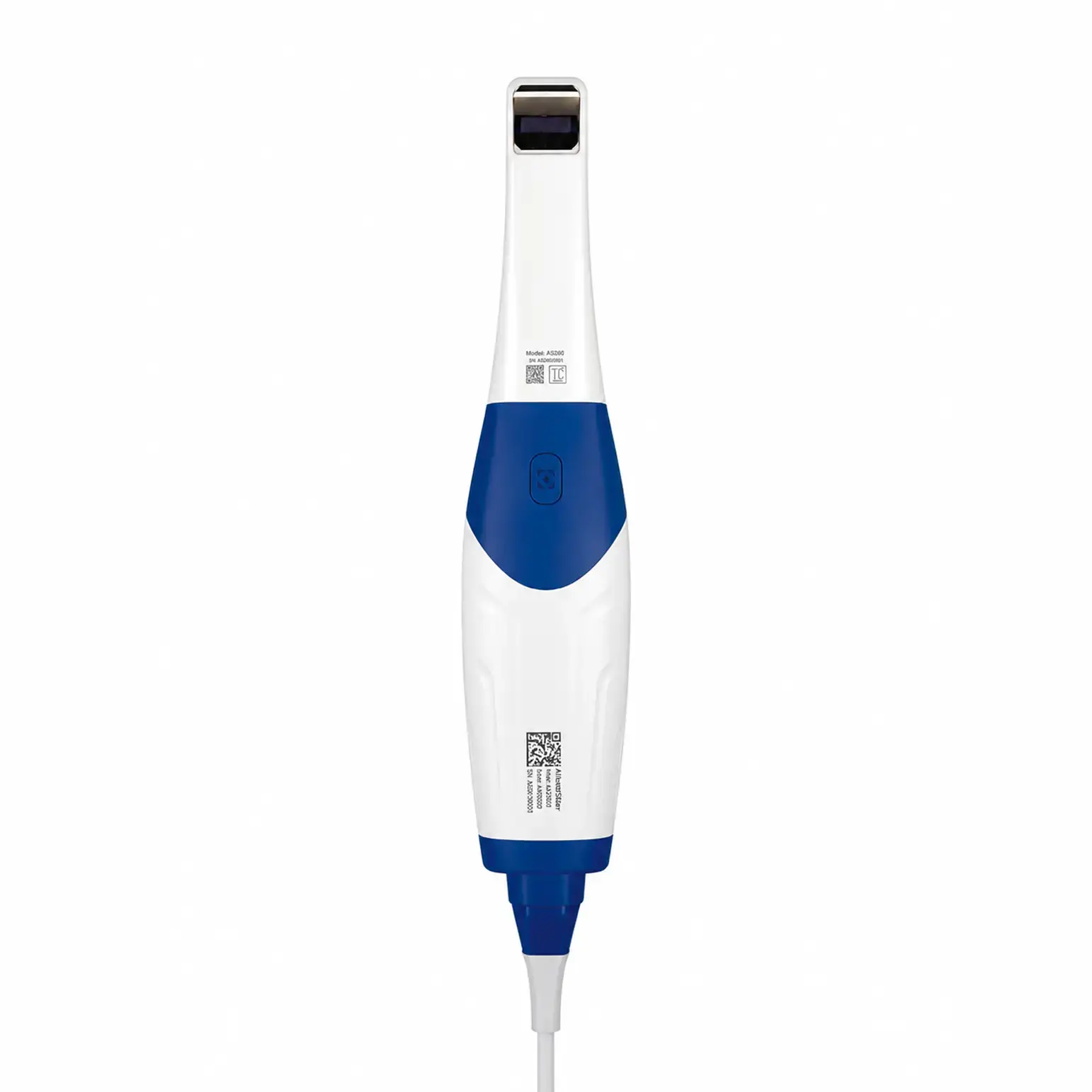
An intraoral scanner is a digital dental device used to capture the visible surfaces of teeth, gingiva, preparations, implants and surrounding oral structures. The operator moves the scanning tip around the patient’s mouth while the software combines multiple images into a three-dimensional digital model.
The completed scan can be reviewed immediately, corrected where necessary, stored in the patient record and transferred electronically to a dental laboratory or CAD/CAM platform. Clinics can also connect the scanner with digital dentistry equipment, design software, milling machines and dental 3D printers.
Common clinical applications include:
- Crowns and bridges
- Inlays, onlays and veneers
- Implant restorations
- Orthodontic aligners and retainers
- Night guards and splints
- Diagnostic digital models
- Digital smile design
- Surgical and restorative planning
- Patient monitoring over time
A detailed review published through the National Library of Medicine describes the clinical applications, advantages and limitations of intraoral scanners in dentistry.
Why Intraoral Scanner UAE Technology Matters for Dental Clinics
Clinics operating in a competitive healthcare market need equipment that supports efficient treatment, reliable communication and a professional patient experience. An Intraoral Scanner UAE workflow can help reduce dependence on conventional impression materials while creating digital records that are easier to review, share and store.
Improved Patient Comfort
Conventional impression trays can cause discomfort, gagging or anxiety for some patients. Digital scanning avoids a tray filled with impression material in many routine cases. The operator can usually pause the scan, allow the patient to rest and continue from the required area.
Immediate Scan Evaluation
A digital model can be inspected on screen before the patient leaves the clinic. The dentist can identify missing data, unclear preparation margins, soft-tissue interference or incomplete occlusal information. In many systems, only the affected area needs to be rescanned.
Faster Laboratory Communication
Digital files can be transferred electronically to a compatible dental laboratory. This may reduce physical transportation at the impression stage and allows the laboratory to review the case earlier. For a broader overview of scanning, design, milling and finishing, read the CAD CAM dentistry workflow guide.
Better Patient Communication
A three-dimensional model shown on a monitor can help patients understand worn teeth, crowding, recession, missing teeth and proposed restorative plans. Visual explanation may make treatment discussions clearer and more engaging.
Digital Record Storage
Digital models reduce the need to store large numbers of physical casts. When supported by the software, scans can also be compared over time to monitor tooth wear, gingival changes, orthodontic movement or restorative conditions.
Intraoral Scanner UAE Accuracy and Clinical Performance
Accuracy is one of the most important factors when evaluating an Intraoral Scanner UAE device. Nevertheless, performance depends on more than the scanner brand or advertised speed.
Clinical results may be influenced by:
- The length and complexity of the scanned area
- Preparation design and margin visibility
- Moisture, saliva and blood control
- Soft-tissue movement
- Scanner technology and software version
- The selected scanning strategy
- Operator experience
- Implant position and angulation
- Scan body selection and CAD library compatibility
- Calibration and maintenance
Digital impressions are commonly used for single restorations and many short-span applications. More complex full-arch, edentulous and implant cases should be evaluated carefully because performance can vary according to the system, scanning protocol and clinical conditions. The American Dental Association’s digital dentistry overview provides additional professional context on the use of intraoral scanning technologies.
During a product demonstration, ask the supplier to scan a case similar to the procedures regularly performed in your clinic. A perfect model scan does not always represent daily clinical performance.
How to Choose the Best Intraoral Scanner UAE System
1. Clinical Indications
Confirm which procedures the scanner is designed and validated to support. A system used mainly for crowns and bridges may have different requirements from a scanner intended for orthodontic full-arch cases or implant prosthodontics.
Evaluate margin visibility, occlusal registration, full-arch consistency, soft-tissue capture, implant scan body support and repeatability between operators.
2. Scan Speed and Processing
Fast scanning is useful, but the complete workflow matters more than a promotional speed figure. Check the time required to create a patient case, complete the scan, process the model, correct missing areas, record the bite and export or upload the final file.
A reliable scanner that needs fewer corrections may be more productive than a faster system that frequently loses tracking or requires rescanning.
3. Handpiece Ergonomics
The handpiece should feel balanced and comfortable during repeated daily use. Ask the dentists and assistants who will operate the scanner to test its weight, grip, button position, cable connection and access to posterior areas.
Also compare tip dimensions and the availability of different tip sizes for children, patients with limited opening and difficult posterior access.
4. Wired or Wireless Operation
Wireless scanners can improve freedom of movement and simplify use between treatment rooms. Clinics should still evaluate battery life, charging time, connection stability and replacement battery costs.
Wired scanners provide continuous operation without battery management, but cable placement must suit the treatment room. The best option depends on clinic layout, daily case volume and the number of users.
5. Colour and AI-Assisted Scanning
Colour scanning can help the operator distinguish enamel, gingiva, restorative materials and marked areas. Some platforms also use artificial intelligence to remove unwanted soft tissue, identify scan gaps or assist with case review.
Before purchasing an AI feature, ask whether it is included in the standard package, whether it requires a subscription and whether the operator can review or reverse software changes.
Open and Closed Digital Workflows
One of the most important purchasing questions is whether the scanner works within an open or closed ecosystem.
Open Workflow
An open workflow normally allows the clinic to export commonly used formats such as STL, PLY or OBJ and transfer cases to different laboratories or design platforms. This can provide greater flexibility and reduce dependence on one manufacturer.
However, the word “open” does not always mean that every export, integration or cloud feature is free. Ask for a written list of included formats and any additional charges.
Closed Workflow
A closed workflow is primarily designed around a specific manufacturer’s software, laboratory network or production system. It may offer straightforward integration, but it can limit laboratory choice and make future changes more difficult.
Before purchasing, complete a real test: scan a case, export it, send it to your preferred laboratory and confirm that the laboratory can open and use the file correctly.
Intraoral Scanner UAE Software, Subscription and Ownership Costs
The purchase price is only one part of the total Intraoral Scanner UAE investment. Ask the supplier to provide a clear breakdown of current and recurring costs.
Possible expenses include:
- Annual software subscriptions
- Cloud storage fees
- Case-transfer or export fees
- Orthodontic, implant or smile-design modules
- Software upgrades
- Warranty extensions
- Replacement scanning tips
- Calibration tools
- Laptop or workstation requirements
- Training for new team members
- Maintenance and technical service
Compare the estimated total cost over three to five years, not only the initial quotation. A lower-priced device may become more expensive if essential functions require recurring payments.
Compatibility With Dental Laboratories
Before choosing a scanner, speak with the laboratories that receive most of your cases. Ask which scanner platforms they regularly support, which file formats they accept and whether they can receive cases directly through the scanner portal.
For implant workflows, confirm scan body support, implant library compatibility and the laboratory’s experience with the selected system. Laboratory compatibility is especially important for complex prosthodontic and full-arch cases.
You can compare available models in the Futuremirates intraoral scanner category.
Integration With CAD/CAM and Dental 3D Printing
An intraoral scanner can operate as a standalone digital impression device, but its long-term value may increase when it connects with a broader CAD/CAM workflow.
A typical digital process may include:
- Intraoral scanning
- Digital case design
- Laboratory or in-house production
- Milling or dental 3D printing
- Finishing, quality control and clinical delivery
Clinics planning future in-house production should confirm compatibility with their preferred design software, dental milling machines, materials and dental 3D printers.
Intraoral Scanner UAE Training and Operator Learning Curve
Even an advanced Intraoral Scanner UAE platform cannot compensate for poor preparation visibility, moisture control or an incorrect scanning strategy. Operator experience can influence scan completeness, treatment time and consistency, particularly in longer or more complex cases.
A study indexed in PubMed discusses variables that can influence the accuracy of full-arch digital implant impressions, including operator experience and scanner type.
A complete training program should include:
- Recommended scanning sequence
- Moisture and soft-tissue management
- Preparation margin capture
- Bite scanning and occlusal review
- Implant scan body protocols
- Full-arch scanning strategies
- Correction of missing data
- Case export and laboratory communication
- Cleaning, disinfection and tip sterilization
- Software updates and common troubleshooting
Training should include dentists, dental assistants and any team member responsible for submitting cases.
Cleaning, Disinfection and Scanner Tips
Scanner tips and handpieces must be cleaned, disinfected or sterilized according to the manufacturer’s validated instructions. Before purchasing, check whether the tip is reusable, the approved sterilization method, the maximum number of cycles and the cost and availability of replacement tips.
Clinics should also confirm which parts of the handpiece can be disinfected and how the optical window should be cleaned. General infection-control recommendations for dental settings are available from the Centers for Disease Control and Prevention, while the scanner manufacturer’s instructions should be followed for the specific device.
Local Technical Support in the UAE
Technical support is a major part of the buying decision. A clinic may depend on its scanner for restorative, orthodontic and implant cases, so extended downtime can delay patient treatment and laboratory production.
Before signing the quotation, confirm:
- Availability of UAE-based technical support
- Installation and initial setup
- Remote and on-site troubleshooting
- Expected response time
- Warranty coverage
- Availability of a replacement or loan unit
- Spare-part availability
- Support for software and hardware issues
- Assistance with laboratory integration
- Training after major software updates
Futuremirates supports clinics with product guidance, digital workflow planning, training and local follow-up. Learn more about selecting a reliable dental equipment supplier in Dubai.
Calculate the Total Cost of Ownership
The best scanner is not always the least expensive model or the device with the longest feature list. The most suitable solution is the one that matches the clinic’s real treatments and can be used consistently.
Total ownership cost = purchase price + software fees + accessories + training + maintenance + replacement tips + workstation requirements + expected service costs.
Compare the total cost with potential operational benefits, including reduced use of impression materials, fewer retakes, faster file transfer, easier model storage, improved laboratory communication and future expansion into CAD/CAM or 3D printing.
Questions to Ask During an Intraoral Scanner UAE Demonstration
Do not limit the demonstration to scanning a perfect dental model. Ask the supplier to show the complete Intraoral Scanner UAE workflow using a realistic case.
- Can the scanner capture a posterior crown preparation?
- How are missing areas identified and rescanned?
- How is the bite recorded and adjusted?
- Can files be exported as STL, PLY or OBJ?
- Are exports included in the purchase price?
- What annual subscription is required?
- Can the scanner communicate with our current laboratory?
- Which implant and scan body libraries are supported?
- How are scanner tips cleaned and sterilized?
- How many tips are included?
- What computer specifications are required?
- What happens if the scanner stops working?
- Is a replacement unit available?
- What training is included?
- Are software upgrades included?
- Can multiple dentists use the system?
- Can the scanner be moved between treatment rooms?
- How is patient data stored and transferred?
- Which features require additional payment?
- What is the estimated three- or five-year ownership cost?
Which Scanner Is Right for Your Clinic?
General Dental Clinics
Prioritize easy operation, reliable crown and bridge scanning, comfortable ergonomics and simple laboratory transfer.
Orthodontic Clinics
Look for efficient full-arch capture, patient-monitoring tools, orthodontic software integration and aligner workflow compatibility.
Implant Clinics
Evaluate scan body compatibility, implant libraries, full-arch performance, scanning strategy and laboratory support.
Prosthodontic Clinics
Focus on preparation margin capture, repeatability, long-span performance, occlusal records and integration with advanced CAD/CAM platforms.
Multi-Chair Clinics
Consider portability, user management, data access, battery management, workstation requirements and support for multiple operators.
Intraoral Scanner UAE FAQ
What is the best intraoral scanner in the UAE?
There is no single system that is best for every clinic. The right choice depends on clinical applications, laboratory compatibility, software costs, ergonomics, training and local technical support.
How much does an intraoral scanner cost in the UAE?
Pricing varies according to the scanner model, software package, accessories, workstation requirements, warranty and training. Compare the total three- to five-year ownership cost rather than only the initial price.
Can an intraoral scanner replace conventional impressions?
Digital scanning can replace conventional impressions in many restorative, orthodontic and implant applications. Alternative techniques may still be appropriate for certain complex, edentulous or full-arch cases.
Can the scanner connect to any dental laboratory?
Compatibility depends on export formats, portal access and the laboratory’s software. Test the complete transfer process before purchasing.
Does an intraoral scanner require an annual subscription?
Some systems include core software, while others charge recurring fees for exports, cloud storage, updates or advanced modules. Request a written breakdown of all recurring costs.
Is training necessary?
Yes. Training helps the team follow the correct scanning strategy, capture margins, manage soft tissue, scan implants and transfer cases consistently.
Final Recommendation
Purchasing an Intraoral Scanner UAE solution should be treated as a long-term clinical and operational investment. Scan speed and initial price are important, but they should not be the only deciding factors.
The selected scanner should match the clinic’s procedures, connect with the preferred dental laboratory, fit the existing workflow and include dependable training and technical support.
Before making a final decision, request a live demonstration, confirm all software and subscription costs, test file compatibility and review the complete warranty and service package.
Request an Intraoral Scanner UAE Consultation
Futuremirates helps dental clinics compare digital dentistry solutions based on their clinical needs, workflow requirements and future expansion plans.
Explore the intraoral scanner range or contact the Futuremirates team to request a consultation, product demonstration or quotation in Dubai and across the UAE.