Introduction to the BLZ Lab Scanner
The BLZ Lab Scanner represents a significant leap forward in dental technology.
It’s designed to capture highly accurate 3D models of dental impressions, gypsum casts, and even directly from the patient’s mouth
(intraoral scanning, although this is typically a separate device). This digital data is then used to create precise dental restorations,
orthodontic appliances, and surgical guides. The BLZ Lab Scanner streamlines the entire process, reducing errors, saving time,
and ultimately improving patient outcomes.
Key Features and Benefits BLZ Lab Scanner
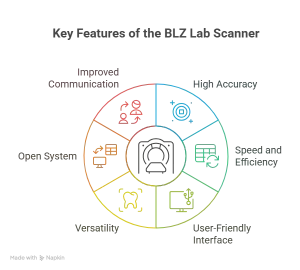
The BLZ Lab Scanner boasts a range of features that contribute to its superior performance:
-
High Accuracy: The scanner utilizes advanced optical technology to capture intricate details with exceptional accuracy. This ensures that the resulting restorations fit perfectly and function optimally.
-
Speed and Efficiency: Compared to traditional methods, the BLZ Lab Scanner significantly reduces the time required to create dental models. This allows dental labs to process more cases and deliver restorations faster.
-
User-Friendly Interface: The scanner’s software is intuitive and easy to use, even for those with limited experience in digital dentistry. This minimizes the learning curve and allows dental technicians to quickly become proficient.
-
Versatility: The BLZ Lab Scanner can be used to scan a wide variety of dental objects, including impressions, casts, and wax-ups. This makes it a versatile tool for any dental lab.
-
Open System: Many BLZ Lab Scanners are designed as open systems, meaning they can integrate with various CAD/CAM software programs. This gives dental labs the flexibility to choose the software that best suits their needs.
-
Improved Communication: Digital models created by the BLZ Lab Scanner can be easily shared with dentists and other dental professionals. This facilitates better communication and collaboration, leading to improved treatment planning and outcomes.
How the BLZ Lab Scanner Works
The scanning process typically involves the following steps:
-
Preparation: The dental object (impression, cast, etc.) is prepared for scanning. This may involve applying a scanning spray to improve reflectivity.
-
Scanning: The object is placed inside the scanner, and the scanning process is initiated. The scanner uses optical sensors to capture 3D data from the object’s surface.
-
Data Processing: The scanned data is processed by the scanner’s software to create a digital 3D model.
-
Model Refinement: The digital model may be refined to remove any imperfections or artifacts.
-
Export: The final 3D model is exported in a standard file format (e.g., STL, OBJ) for use in CAD/CAM software.
Applications in Dentistry
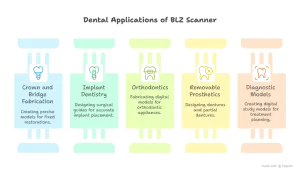
The BLZ Lab Scanner has a wide range of applications in modern dentistry:
-
Crown and Bridge Fabrication: Creating highly accurate models for the design and fabrication of crowns, bridges, and other fixed restorations.
-
Implant Dentistry: Designing and fabricating surgical guides for precise implant placement.
-
Orthodontics: Creating digital models for the design and fabrication of orthodontic appliances, such as aligners and retainers.
-
Removable Prosthetics: Designing and fabricating dentures and partial dentures.
-
Diagnostic Models: Creating digital study models for treatment planning and patient education.
-
Integrating the BLZ Lab Scanner into Your Workflow
Integrating a BLZ Lab Scanner into your dental lab workflow can significantly improve efficiency and accuracy. Here are some tips for a smooth transition:
-
Training: Ensure that your dental technicians receive proper training on how to use the scanner and its software.
-
Calibration: Regularly calibrate the scanner to maintain its accuracy.
-
Software Updates: Keep the scanner’s software up to date to ensure optimal performance and access to the latest features.
-
Maintenance: Perform regular maintenance on the scanner to prevent breakdowns and ensure its longevity.
-
Workflow Optimization: Analyze your current workflow and identify areas where the scanner can be used to improve efficiency.
Choosing the Right BLZ Lab Scanner
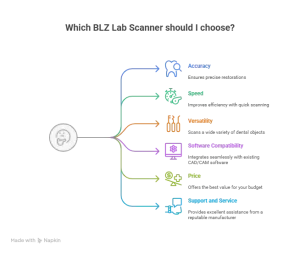
When choosing a BLZ Lab Scanner, consider the following factors:
-
Accuracy: Look for a scanner with a high level of accuracy to ensure precise restorations.
-
Speed: Choose a scanner that can scan objects quickly to improve efficiency.
-
Versatility: Select a scanner that can scan a wide variety of dental objects.
-
Software Compatibility: Ensure that the scanner is compatible with your existing CAD/CAM software.
-
Price: Consider your budget and choose a scanner that offers the best value for your money.
-
Support and Service: Choose a scanner from a reputable manufacturer that offers excellent support and service.
Future Trends in Dental Scanning
The field of dental scanning is constantly evolving. Some of the future trends to watch out for include:
-
Artificial Intelligence (AI): AI is being used to automate tasks such as model refinement and restoration design.
-
Cloud-Based Solutions: Cloud-based platforms are making it easier to share digital models and collaborate with other dental professionals.
-
Improved Accuracy: Scanners are becoming increasingly accurate, allowing for even more precise restorations.
-
Increased Speed: Scanners are becoming faster, further improving efficiency.
Conclusion
The BLZ Lab Scanner is a powerful tool that can revolutionize dental workflows. By providing accurate, efficient, and versatile scanning capabilities, it helps dental labs create high-quality restorations and improve patient outcomes. As technology continues to advance, we can expect to see even more innovative applications of dental scanning in the future.